


Employ a School Lockdown That Takes Milliseconds Instead of Minutes
Boost Security Responses With Automated Access Control
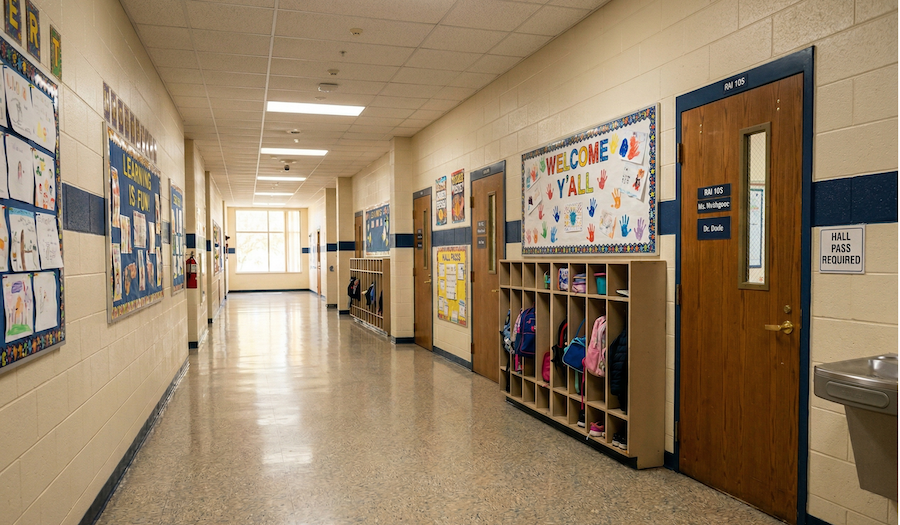
Emergencies will create panic and disorder, no matter how well prepared your staff is. Getting staff to manually lock down rooms in these scenarios will take minutes, even in the best of cases, and does not account for misplaced keys, human error, or delayed communication.
One of the primary reasons we recommend schools in Harlingen and throughout Texas update their access control systems is to implement global lockdowns triggered by a single command. These take seconds and don’t require campus-wide coordination.
There is no time to waste when your security and staff are at risk. See how modern access control solutions make it easy to secure your property and give your administration greater peace of mind.
SEE MORE: How to Tell the Difference Between Security Theater and Real Protection
Where Do School Lockdowns Go Wrong?
Every school likes to think it is prepared for an emergency. But when the first alarm sounds or the intercom warns of an immediate lockdown, the adrenaline rush (and ensuing panic) kicks in. Running to find keys and going into the hallway to check the status of the lockdown all delay the process and put staff at unnecessary risk, depending on the situation.
With a global lockdown, you have a single point of command. The principal or security officer initiates security protocols from a single computer or mobile device, without leaving their location. In some cases, this response is triggered by sensors or gunshot detection. And this centralized system provides a dashboard showing the real-time status of every door.
Staff, students, and parents get peace of mind knowing safety is managed by a professionally installed security system rather than the actions of scared, fallible individuals.
Understanding How Global Lockdowns Work
Now that we’ve explained why global lockdowns are important, we want to show you how they work. The sequence requires your access control to have proper sensors, triggers, command centers, and electronic hardware.
- Command Initiation: Either an authorized user or a sensor initiates the lockdown. Personnel must provide credentials to avoid accidental triggers.
- Centralized Coordination: The on-site or cloud-based controller receives the request and simultaneously broadcasts a lock signal to all the door controllers on the network.
- Electronic Hardware: Locks at your designated entry points (main entrance, classrooms, etc.) receive and process the request.
- Feedback loop: Hardware sends a 'status confirmed' signal back to the dashboard, so administrators see the building is 100% secure.
How to Optimize Your Global Lockdowns
As with all technology, when it's not implemented properly, the best intentions can backfire. For example, without the right failsaves in place, your campus can quickly go from locked to trapped. We incorporate Request to Exist sensors and crash bars so doors are secured against outside entry while allowing emergency egress.
Getting your access control to communicate with other technology systems is also important. Your lockdown command should also trigger other security layers like flashing lights, mass MS notifications to parents, and direct alerts to local Harlingen law enforcement.
Moving from reactive security to proactive automation changes how your school handles a crisis. While manual lockdowns are slow and prone to error, integrated systems provide millisecond response times that protect your students and staff. Circle Industries specializes in these high-stakes integrations for educational facilities.
We look forward to speaking with you about securing your campus. Click here to contact the experts at Circle Industries and schedule your security assessment.


